Foley Council Gives First Reading to Hemp Products Licensing Ordinance
An ordinance to regulate the local sale of consumable hemp products had its first reading before the Foley City Council on Monday. The measure would add hemp-licensing provisions to Chapter 5 of the city code, covering businesses within the city's corporate limits and police jurisdiction.
The Foley City Council gave first reading on Monday, May 18, to an ordinance that would regulate the local sale of consumable hemp products — requiring sellers to hold a city license, barring sales to anyone under 21, and folding in the state's new hemp rules. The council approved the first reading unanimously.
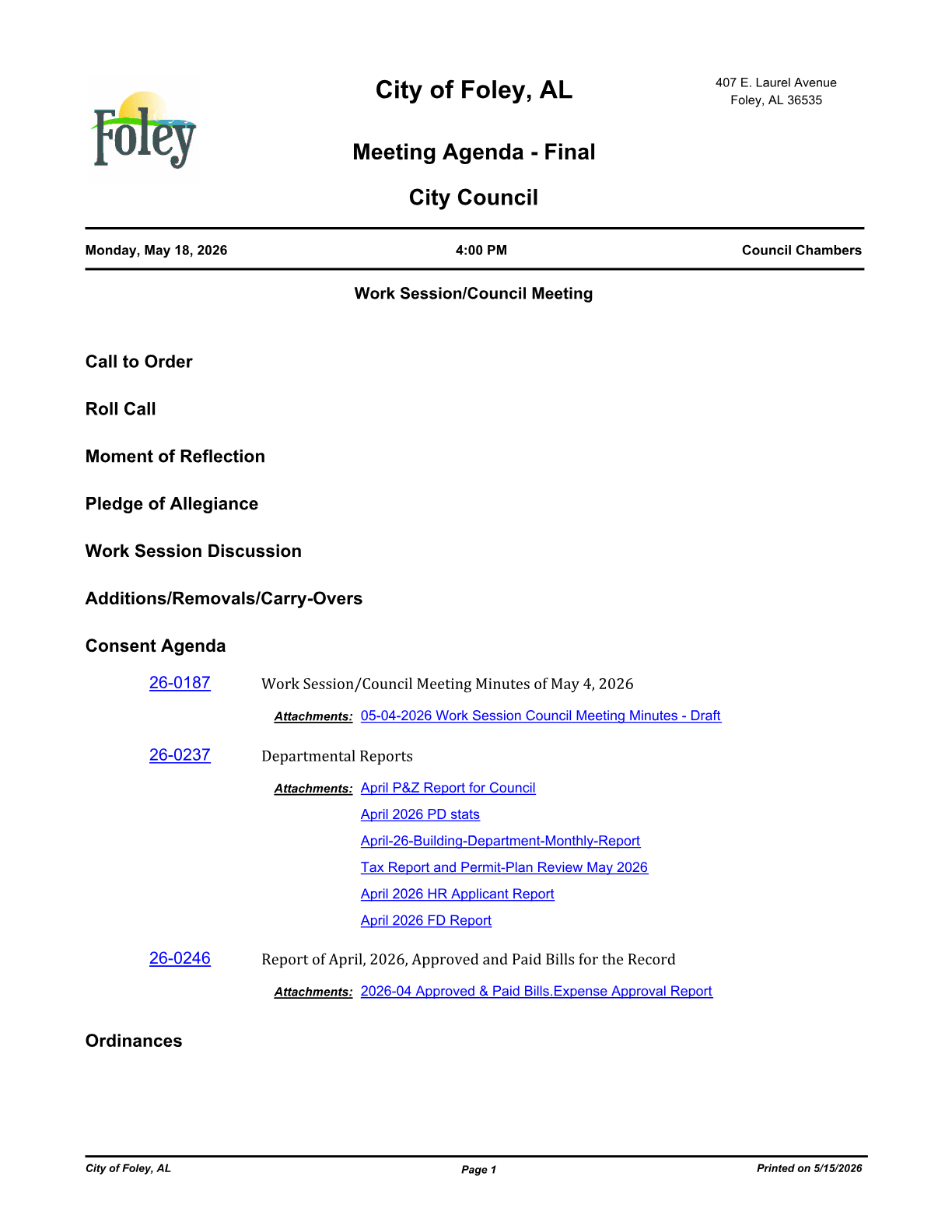
Agenda excerpt, May 18, 2026 Foley City Council meeting, page 1.
Ordinance 26-0217 would add a new Article XI, "Consumable Hemp Products," to Chapter 5 of the city code, applying to businesses within Foley's corporate limits and police jurisdiction. The measure was prompted by state action: Revenue Director Jamie Smith told the council that Alabama passed an act last year regulating hemp products and their enforcement, and that the city ordinance establishes local rules to match, including a prohibition on selling to minors.
Under the draft, any business selling consumable hemp products would need an annual "CHP License" from the city — a separate license for each location — at a fee of $1,000 per licensed place of business. Applicants would go through the standard city business-license process plus additional vetting that can include criminal background checks and personal interviews, and would have to disclose anyone holding a 10 percent or greater ownership stake.
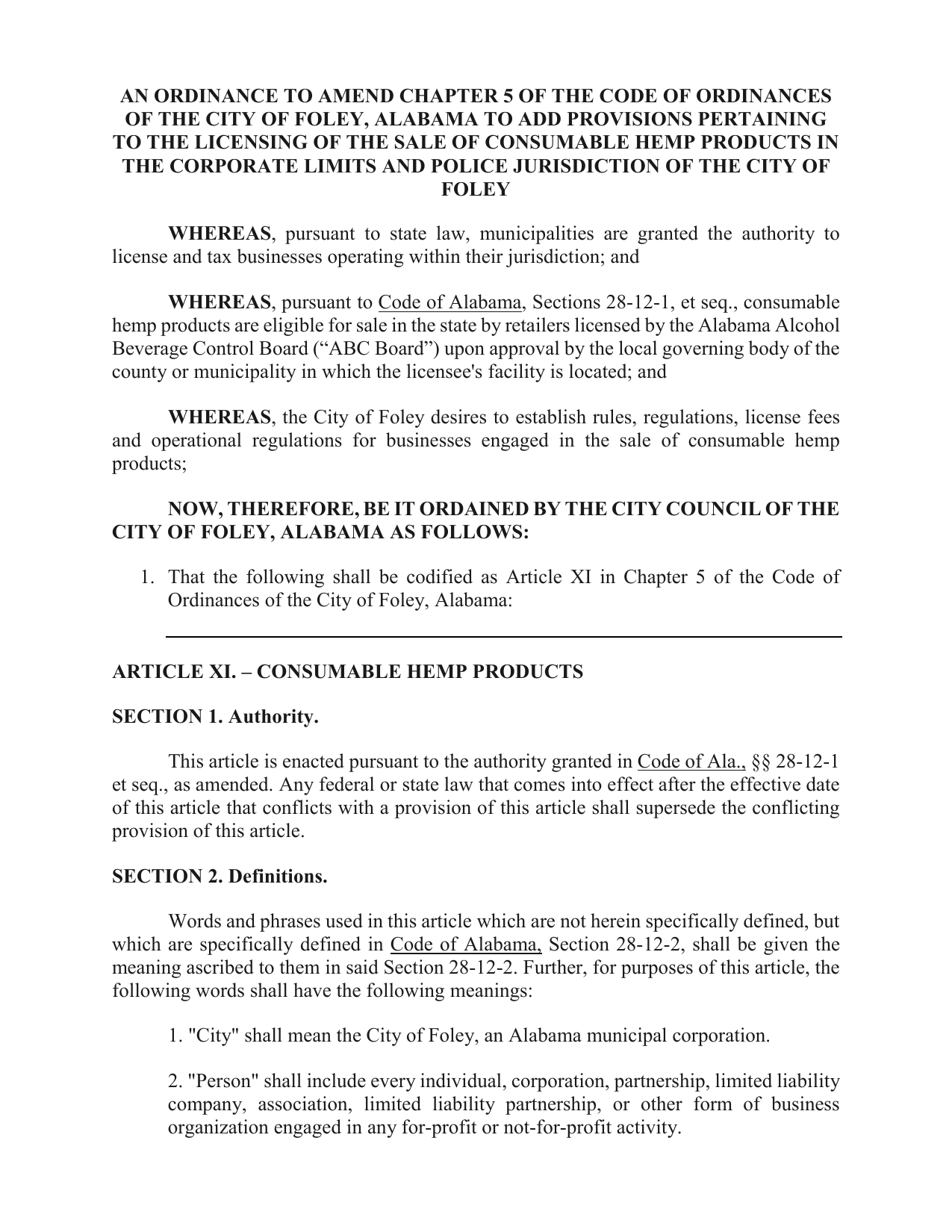
Ordinance 26-0217 as submitted for council review.
The ordinance leans heavily on the state framework. Consumable hemp products in Alabama are sold by retailers licensed through the Alabama Alcoholic Beverage Control Board, and the ordinance adopts the ABC Board's rules and the definitions set in the Code of Alabama. Retailers would have to verify that customers are at least 21, restrict the licensed premises to people 21 and older, post age-restriction signage, and keep the products in an area not accessible to the general public. Violations could carry a fine of up to $500, up to six months in jail, or both.
The measure cleared first reading on a motion by Council Member Charles Ebert III, seconded by Council Member Larry Engel. Under standard procedure, an ordinance must pass a second reading before it can take effect; city records show 26-0217 has since advanced to a second reading.