Orange Beach to Weigh $504,000 Grant to Protect Nesting Plovers and Terns
The City Council will take up a resolution at its June 16 Committee of the Whole authorizing a $504,000 grant agreement with the National Audubon Society to fund stewardship of beach-nesting birds through 2029. The money traces to Deepwater Horizon oil-spill restoration funds.
The Orange Beach City Council is set to take up a resolution accepting a $504,000 grant from the National Audubon Society to pay for the stewardship of beach-nesting birds along the city's shoreline over the next three years, according to the resolution and grant agreement in the June 16 meeting packet.
Under the agreement, Audubon would reimburse the city up to $504,000 for the personnel and supplies needed to protect nesting birds in Orange Beach, the packet states. The agreement runs from May 1, 2026, through May 1, 2029.
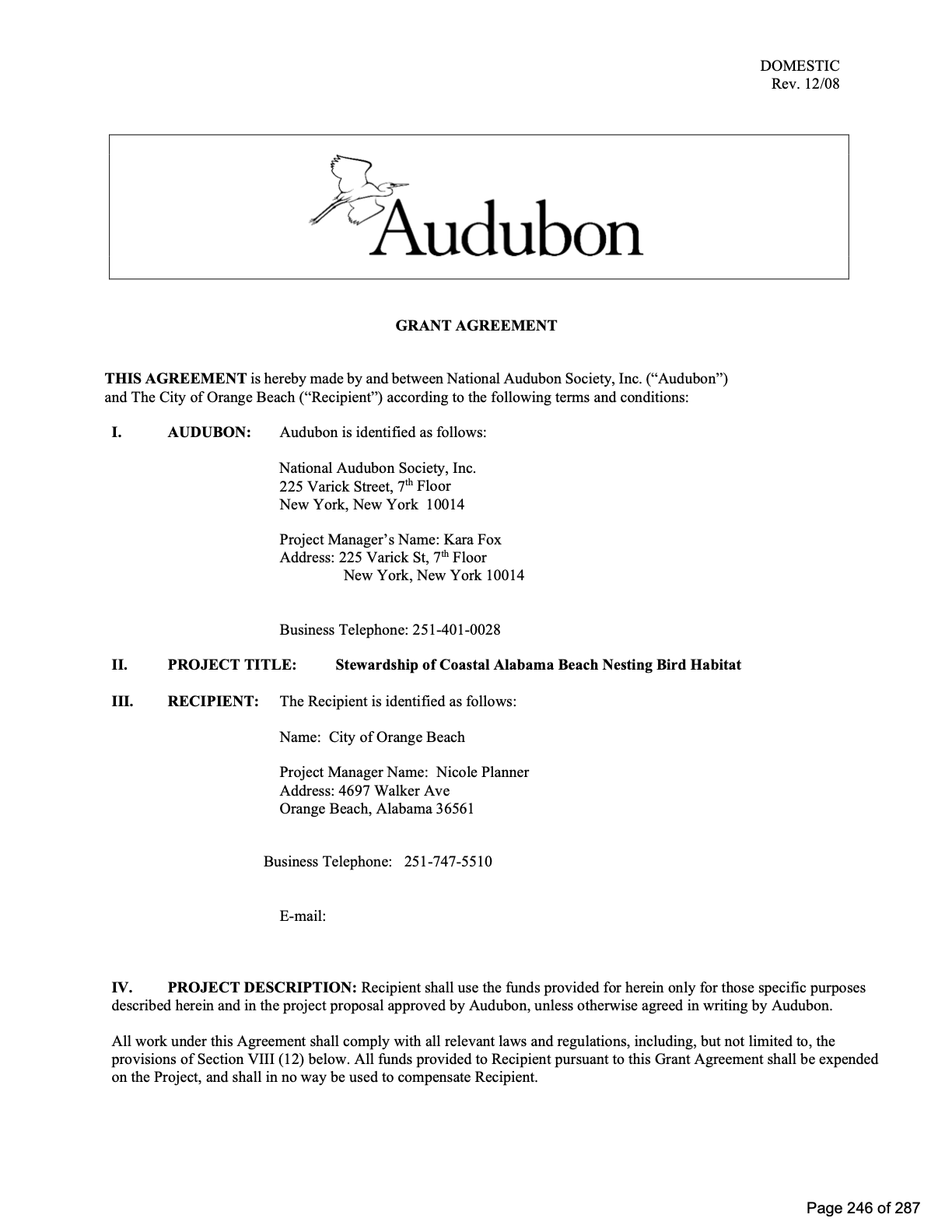
First page of the National Audubon Society grant agreement — June 16 meeting packet.
The money traces back to the 2010 Deepwater Horizon oil spill. Audubon's funding comes through the Implementation Agreement of Deepwater Horizon Natural Resource Damage funds — settlement dollars set aside to restore Gulf resources harmed by the spill — and Audubon would pass those funds to the city to carry out the project.
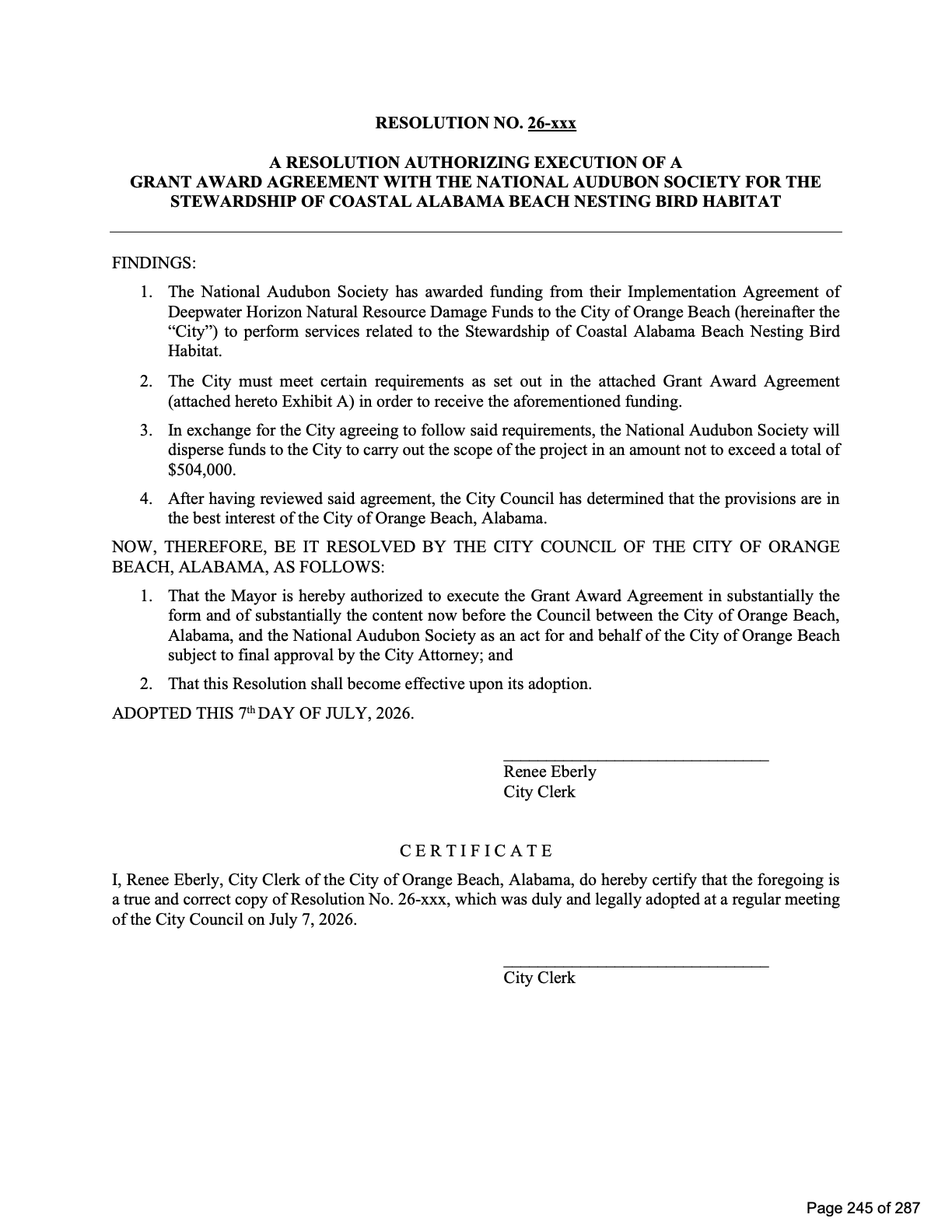
Resolution authorizing the grant agreement — June 16 meeting packet.
The work centers on the beach during nesting season. As ground-nesting species begin courtship and choose nest sites, stewardship teams install signage and symbolic fencing or roping at identified locations; the temporary markers come down at the end of the season, typically mid-to-late August, according to the agreement. Trained seasonal staff and local volunteers improve and protect habitat, reduce human and predator disturbance, and educate beachgoers — including, the agreement notes, "protocols for interacting with beachgoers." Audubon tracks migrating and wintering birds through the Audubon Coastal Bird Survey.
The packet identifies the birds at stake as conservation-priority shorebirds — among them the federally threatened Piping Plover, along with the Snowy Plover, the Least Tern and the Black Skimmer — species that nest directly on open sand and are vulnerable to foot traffic, pets and vehicles during the spring and summer breeding season.
The grant materials frame the effort as a response to human pressure on nesting beaches. Symbolic fencing paired with steady public outreach is "an effective means of increasing breeding success and reversing population declines," the agreement says. Audubon's Coastal Bird Survey, the packet adds, measures the relative abundance and trends of migrating and wintering shorebirds to gauge how the local habitat is faring.
The grant is Item 4 under New Business resolutions on the June 16 Committee of the Whole agenda. A Committee of the Whole is a working session where the council reviews items before final votes at a Regular Council Meeting. The session begins at 5 p.m. Tuesday in the City Hall Council Chambers.